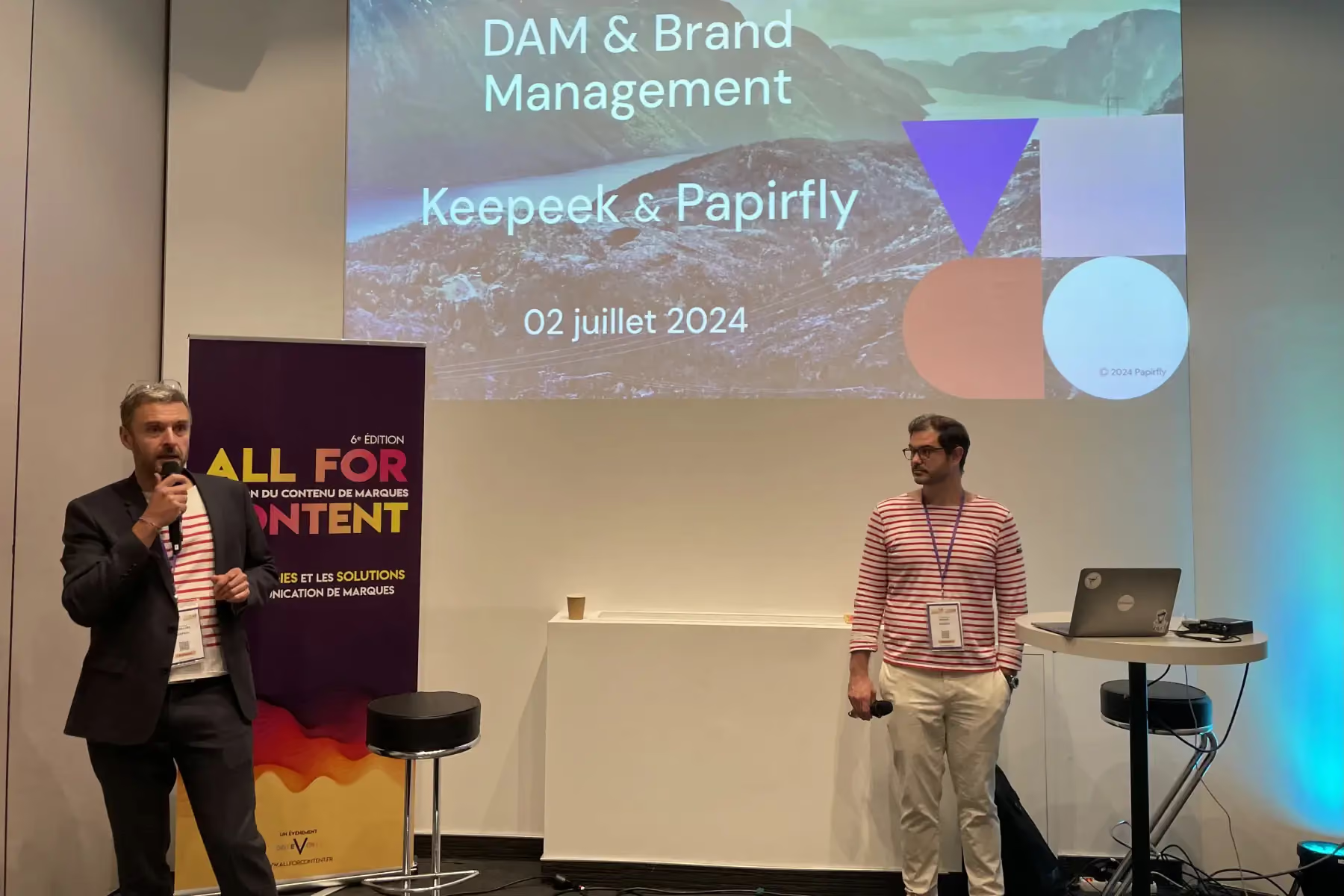
At the All for Content 2024 trade show, Keepeek and Papirfly presented a structured approach to accelerating content creation while ensuring brand identity protection. This conference (replay at the bottom of the page) shows how brand asset management software, combined with a brand activation platform, can centralize media, disseminate guidelines, and automate the production of compliant content on a large scale and across all markets.
Brand asset management software: a foundation for protecting brand identity
Today, brand content creation relies on large volumes of media. Images, videos, documents, banners, and local variations are multiplying. This acceleration poses a twofold challenge. Brands must produce faster while ensuring brand identity protection across all channels.
It is in this context that the conference "Accelerate the creation of your brand content with Keepeek and Papirfly" will be held in July 2024 during the All for Content trade show. It highlights the central role of brand asset management software in media structuring andconsistent brand activation.
Protecting brand identity as an operational challenge
Protecting brand identity is no longer limited to a theoretical framework. It concerns all the daily activities of marketing, communications, and local teams. Every download, every adaptation, and every distribution of content commits the brand.
Without brand asset management software, media circulates in a fragmented manner. Teams store files locally. Versions multiply. Graphic rules are interpreted in different ways. This situation undermines the overall consistency of the brand.
A centralized tool then becomes essential for securing usage and maintaining a consistent identity.
Centralize media with brand asset management software
The first step presented at the conference is to centralize all brand content. Brand asset management software plays a key role here. It brings together images, videos, logos, and documents in a single content repository.
This centralization facilitates the search and reuse of existing content. It saves time and reduces duplication. It also provides a reliable foundation for protecting brand identity.
Each media item is indexed, categorized, and associated with clear metadata. Users can quickly access the right content in the right formats.
When brand asset management is no longer enough
However, the conference highlights an important limitation. Centralizing media alone does not guarantee effective brand application. Local teams do not always have the necessary graphic design skills. Guidelines distributed in the form of static documents are rarely consulted.
Brand asset management software must therefore be complemented by a support strategy. Brands must explain how to use content, in what context, and according to what rules.
This is precisely where the brand activation platform comes in.
The brand activation platform as a natural extension
The brand activation platform transforms the media repository into a powerful tool for brand communication. It structures rules, messages, and campaigns in an editorialized environment.
Logos, colors, fonts, and graphic principles are presented clearly. Media remain connected to the brand asset management software. Any updates are automatically reflected.
This approach strengthens brand identity protection by contextualizing content usage.
Check out the benefits of the Keepeek brand portal.
From static brand book to dynamic brand portal
For a long time, brand books were distributed in PDF format. These documents set out the brand guidelines, but their uptake remains limited. The brand activation platform is changing this approach.
It functions as a structured website with pages and subpages. Each element of the visual identity is explained and illustrated. Users can access both the rules and the associated files.
This dynamic improves understanding and application of the brand across all markets.
Accelerate creation without compromising identity
The conference highlights a key issue. Teams need to produce quickly. Time-to-market is accelerating. Formats are multiplying. This pressure encourages the use of uncontrolled tools.
Without a framework, these practices weaken brand identity protection. Logos are modified. Colors drift. Messages lose consistency.
The proposed solution is based onautomating content creation.
Automation of content creation and brand compliance
Automating contentcreation allowsyou to balance speed and consistency. Templates incorporate brand guidelines upstream. Sensitive areas are locked. Adaptable elements are clearly defined.
Local teams can thus create content without starting from scratch. They comply with graphic constraints while adapting messages to their context.
This approach reduces risks and strengthens brand identity protection.
Discover Keepeek'svisual content creation automation module.
Templates and brand activation platform
The templates presented at the conference cover several formats. Social media, posters, web banners, documents, and videos are included. Each template is linked to brand asset management software.
The images come from the central repository, Keepeek DAM. The texts automatically adapt to the formats. Variations are generated without manual reprocessing.
The brand activation platform then becomes an execution tool, not just a distribution tool.
Video and dynamic formats in brand asset management
Brand identity protection also applies to video content. The tools presented allow you to edit simple videos online. Introductions, transitions, and conclusions are framed.
Users modify certain elements without altering the overall structure. Output formats adapt to distribution channels. This automation reduces errors and speeds up production.
The DAM software remains the sole source of the images used.
Combat shadow IT with a unified platform
The conference also addresses the issue of shadow IT. Uncontrolled tools proliferate when internal solutions are deemed too complex or too slow.
A brand activation platform integrated with digital asset management software offers a credible alternative. Teams have access to tools that are simple, fast, and compliant with internal rules.
This unification secures content and directly contributes to protecting brand identity.
Monitor content usage to better manage the brand
Protecting brand identity also involves measurement. The tools presented include detailed statistics. Brands track content usage by country and by campaign.
This data helps identify the most commonly used formats. It helps tailor messages and improve future campaigns.
Control becomes more precise when all uses are centralized.
Governance and digital asset management
Effective DAM software relies on clear governance. Access rules, media statuses, and validation workflows structure usage.
The quality of metadata plays a key role. It determines how content is searched, disseminated, and reused. User support is a long-term commitment.
This organization ensures the consistency and continuity of the brand identity.
The concrete advantages of the Keepeek and Papirfly platforms
This conference highlights a major development. Digital asset management software is no longer limited to file management. It is becoming a strategic lever for protecting brand identity.
The combination of a brand activation platform and automated content creation meets today's constraints. It structures, accelerates, and secures the production of visual resources on a large scale.
This approach is becoming an operational model for organizations faced with a proliferation of channels and markets.
Watch the replay of the conference "Accelerate the creation of your brand content with Keepeek and Papirfly"



.avif)