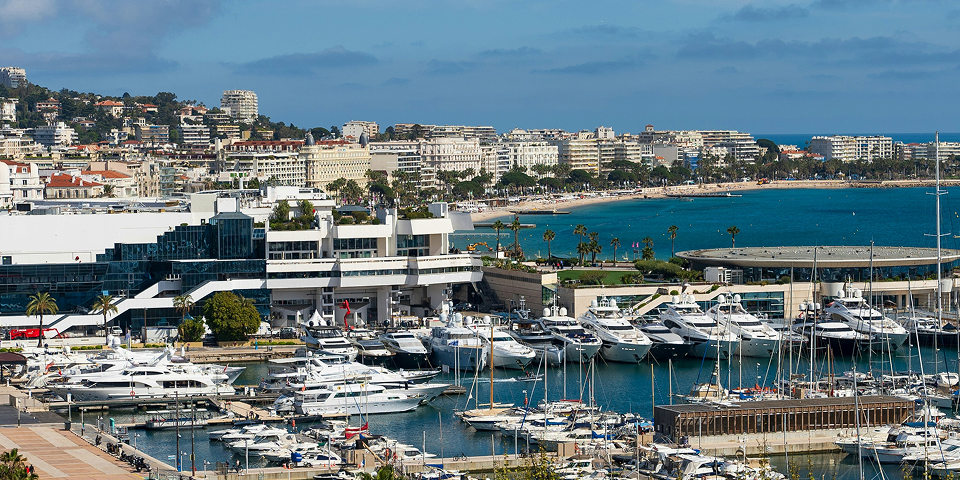
We are pleased to be participating in the All4Customer 1-to-1 Meetings in Cannes, the event that brings together experts in customer experience, AI, and digital marketing. Join us September 15–17 to discover how Keepeek can help you deploy your marketing content.
EDF unifies and accelerates its communications with the Keepeek Media Center
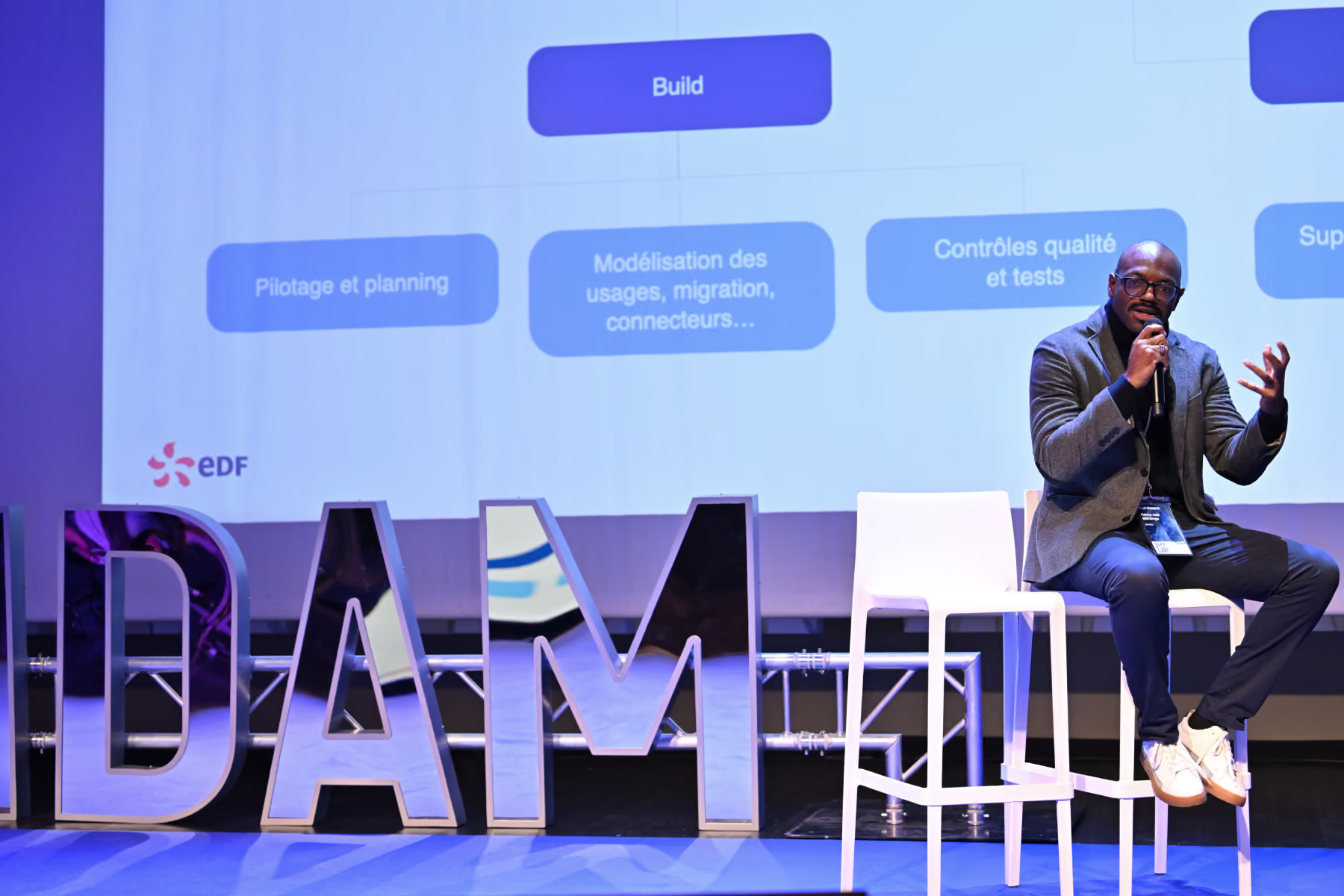
EDF presented the redesign of its Media Center at the OnDAM 2025 trade show (replay at the end of the article). The challenge is clear: to strengthen the centralization of brand content and put usage at the heart of Keepeek's DAM system. The platform is open to all teams that produce, search, index, or distribute media. The result: a simpler, more collaborative experience that is better aligned with the group's communication objectives.
The approach is based on one observation: the historical tool worked, but its potential was underutilized. EDF therefore decided to launch a "season 2" of the project with Keepeek, following a rigorous tender process. The focus is on digital sobriety, collaboration, and measuring adoption.
This feedback was further enriched following the Keepeek/Papirfly customer event on June 16, 2026, during which Valérie Bruandet shared the latest figures and insights related to the project.
A very large group, a need for unification
EDF is one of the world’s leading producers of carbon-free electricity. In 2025, the group generated more than 515.5 TWh, 95% of which was carbon-free. It serves approximately 41.1 million customers and employs 197,363 people worldwide. Its revenue reached €113.3 billion, and its R&D budget amounted to €806 million. These figures illustrate the scale of the challenge: organizing, securing, and leveraging massive volumes of media for a wide variety of uses.
The Media Center is not just for the communications department. Technical professions are also connected to it. Around 10,000 visitors access it. In this context, centralizing brand content is not a luxury. It is a lever for consistency and efficiency. Without centralization, each entity keeps its own photos, videos, and guidelines. Duplicates multiply. Searching becomes tedious. Reuse declines. And brand consistency is diluted.
The goal of the redesign is therefore to bring together the Brand Center and Media Center, but also to rethink the contribution. All of this will be based on clear governance and concrete adoption indicators.
Why a "season 2" of DAM?
Feedback on "season 1" was clear: the tool was appreciated and teams were using it. However, some of its value remained untapped. Certain features were not widely known. Best practices for indexing were not always followed. And much of the media remained scattered across silos. " The Media Center was a highly appreciated tool. People were fans of the tool, but we realized that it was underused," explains Valérie Bruandet, Audiovisual Project Manager at EDF.
This observation served as the starting point for the redesign. Despite a solid foundation, some of the value remained untapped. The Season 2 project therefore had a clear objective: to rethink the ecosystem to adapt it to real uses, improve collaboration, and strengthen the centralization of brand content.
EDF then set three specific objectives: first, to unify; second, to collaborate; and finally, to measure and improve. These three pillars guide the entire project. They structure technical, documentary, and organizational decisions.
Unify: a shared ecosystem, simplified access
When discussing unification, Valérie sums up the ambition: " We wanted an innovative media center focused on usage." Unification means bringing together the Media Center, Brand Center, and contribution space into a coherent environment. The call for tenders was conducted at the group level, with subsidiaries including Enedis. The integration of SSO (Single Sign-On) eliminates access friction, as Valérie points out: " The connection to SSO was extremely important in facilitating access to the Media Center." Users log in with their usual credentials and no longer have to create multiple accounts. This technical unification eliminates much of the friction and improves adoption.
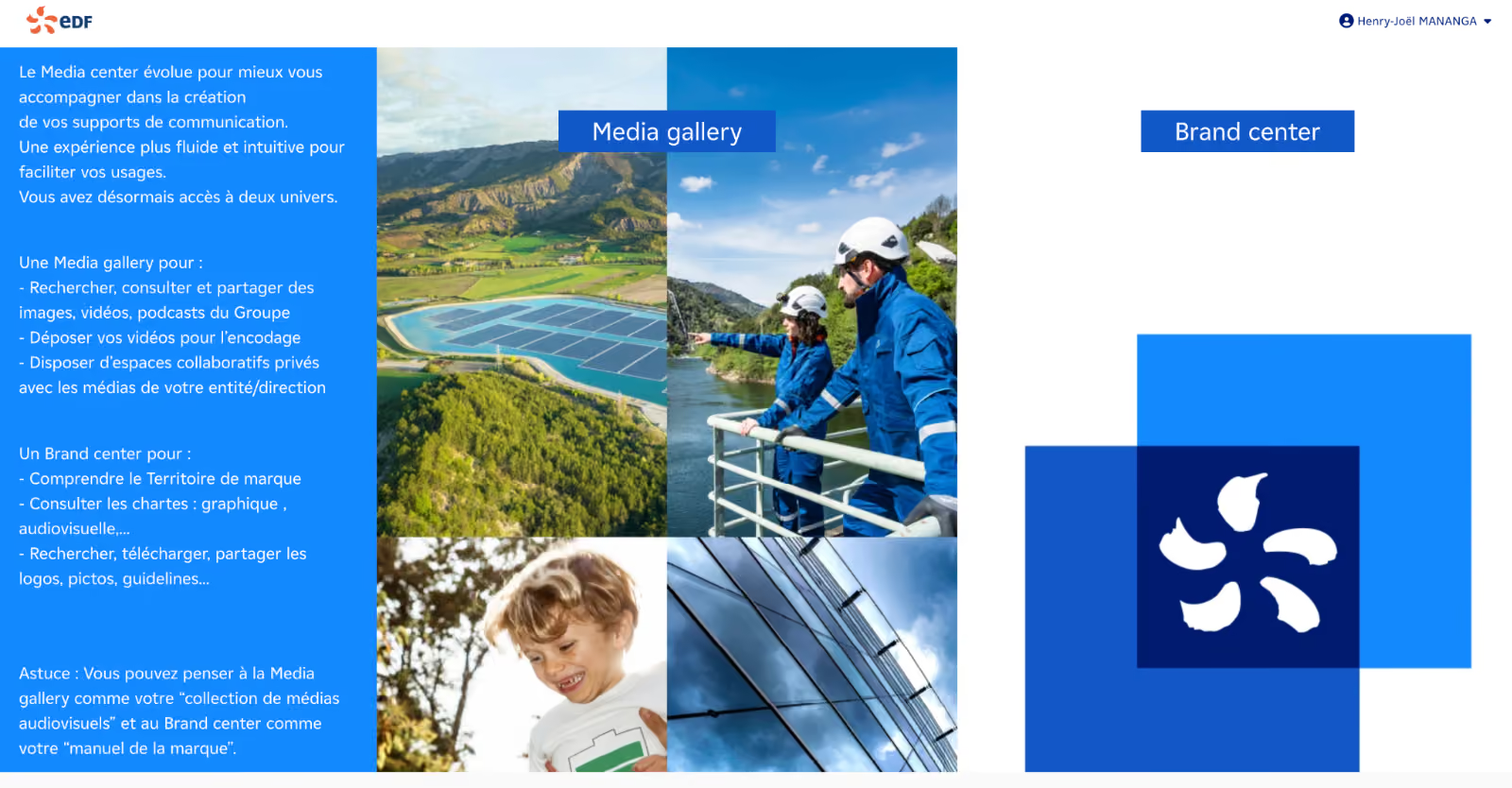
The project is accompanied by a review of interfaces. EDF retains the historical URL. A "compass" page directs users to the Media Gallery for audiovisual content and to the Brand Center forbrand identity elements. Continuity of use provides reassurance. Change becomes gradual. Users are not lost along the way.
EDF Media Center
Unifying also means aligning rights. Each profile has access to what concerns them. The interface becomes specific to each scope. Teams see simple actions, named in everyday language. We talk about uses, not technical parameters.
Collaborate: share better, transfer less
The second pillar is collaboration. EDF wants to reduce large file transfers; the issue of digital sobriety has been a real driving force, according to Valérie: " No to media transfers, no to WeTransfer, no to EDF Transfer. Yes to sharing links." The platform is becoming collaborative software dedicated to media. Several people work together in baskets. They comment. They iterate. They avoid duplication. They distribute formats optimized for consultation and sobriety.
This change affects team culture. Instead of keeping resources locally, they are shared, added to a common pool, properly documented, and made easier to reuse. The benefits are immediate: less time wasted searching for the "right version,"less re-entry, and fewer legal risks.
Measure and improve: KPIs to drive value
The third pillar is measurement. EDF tracks KPIs to understand the adoption of Keepeek DAM:
Membership: active connections, recurrence, creation and use of shopping carts;
Quality: completeness of metadata, percentage of media with validated rights;
Impact: downloads, shares, reuse across entities.
These indicators guide very concrete actions: improving a page, simplifying a file, strengthening training, or adjusting permissions. The logic is iterative. We observe, correct, and confirm. The platform evolves in line with usage patterns.
A step-by-step method: scoping, tendering, building, adoption
The redesign followed a simple but disciplined method. First, there was a long scoping phase. From November 2023 to May 2024, EDF worked with a digital strategy agency, taking a sociological approach to usage. Interviews revealed needs, habits, irritants, and biases. The team drafted specifications focused on usage, not on a list of features.
Next came a 10-month bidding process, from June 2024 to March 2025. Keepeek was selected. Season 2 could begin. The contract is for a term of 6 years. Then came the “build” phase. The team works in short cycles: regular demonstrations and quick decisions. We avoid tunnel vision. The development process remains transparent to everyone.
EDF carefully managed the change process with teasers, editorial committee meetings, webinars, tutorials, and guides. The message is clear: centralizing brand content brings immediate benefits to business lines. The vocabulary remains simple. The discourse focuses on usage, not parameters. This approach reduces resistance. It creates desire, and when desire is there, mastery follows. Webinars reinforce key actions and guides set the framework. The platform becomes part of daily routines.
The role of Keepeek teams: proximity and responsiveness
The project’s success also hinges on the organizational structure put in place by Keepeek. At the client event on June 16, 2026, Henry-Joël Mananga, an Account Manager at Keepeek, summed up this dynamic in one word: closeness. For Valérie Bruandet, this closeness goes beyond just a pleasant work environment: “We have weekly meetings, but ultimately, we talk to each other much more often.”
At Keepeek, the organization is dedicated. A project manager coordinates the schedule, facilitates discussions, and arbitrates issues. The technical teams develop, integrate, and test. The documentation team designs the classification plan, information sheets, and reference systems. Customer Success Premium provides daily support. This proximity allows for quick corrections, capitalization, and progress.
It was this close collaboration that made it possible to build a Media Center focused on usage rather than just technology.
The working method is agile. Cycles are short. Demonstrations mark progress. Decisions remain factual: each decision responds to an identified use. No stacking of modules "just in case." We prefer a useful, solid, and scalable scope.
Rethinking the Media Gallery: personalization and clarity
The Media Gallery is changing its approach. It no longer displays an impersonal page with unhelpful thematic images. The interface adapts to each profile. Entries are action-oriented: "I upload a video" or "I access my entity's media." The thematic widget displays clear labels. Users immediately understand where to go. The learning curve is shorter. Searches are more precise and results are relevant.
When presenting the new Media Gallery, Valérie describes an interface designed to be immediately understandable: " We worked on how to describe its uses. We don't talk about it as a tool, we talk about it as if we were users." This approach reduces barriers to entry and encourages regular use of the DAM.
This choice is based on feedback. Themed thumbnails were not helpful. Users wanted text-based paths. It's more direct and faster. The centralization of brand content is reflected here in a more clearly marked entry point that is more rational and closer to the language used by the teams.
Editorializing the Brand Center: from static PDFs to living pages
The Brand Center is moving away from static PDFs. Each theme has its own page. Logos, pictograms, composition grids, usage rules, etc. It's easy to understand, download, and apply. Media files remain linked to the DAM. Updating a media file is reflected everywhere. Brand consistency is strengthened. Brand deployment gains speed and reliability. Valérie Bruandet highlights the difference with the first version: " This editorialization will make it easier to appropriate all elements of the brand."
This evolution is not just about layout. It changes the way teams access brand assets: no more need to open a bulky PDF style guide to find a logo or usage rule. Thanks to direct synchronization with the DAM, any media update is immediately reflected on the Brand Center pages. This fluidity reinforces brand deployment and ensures consistency across the group.
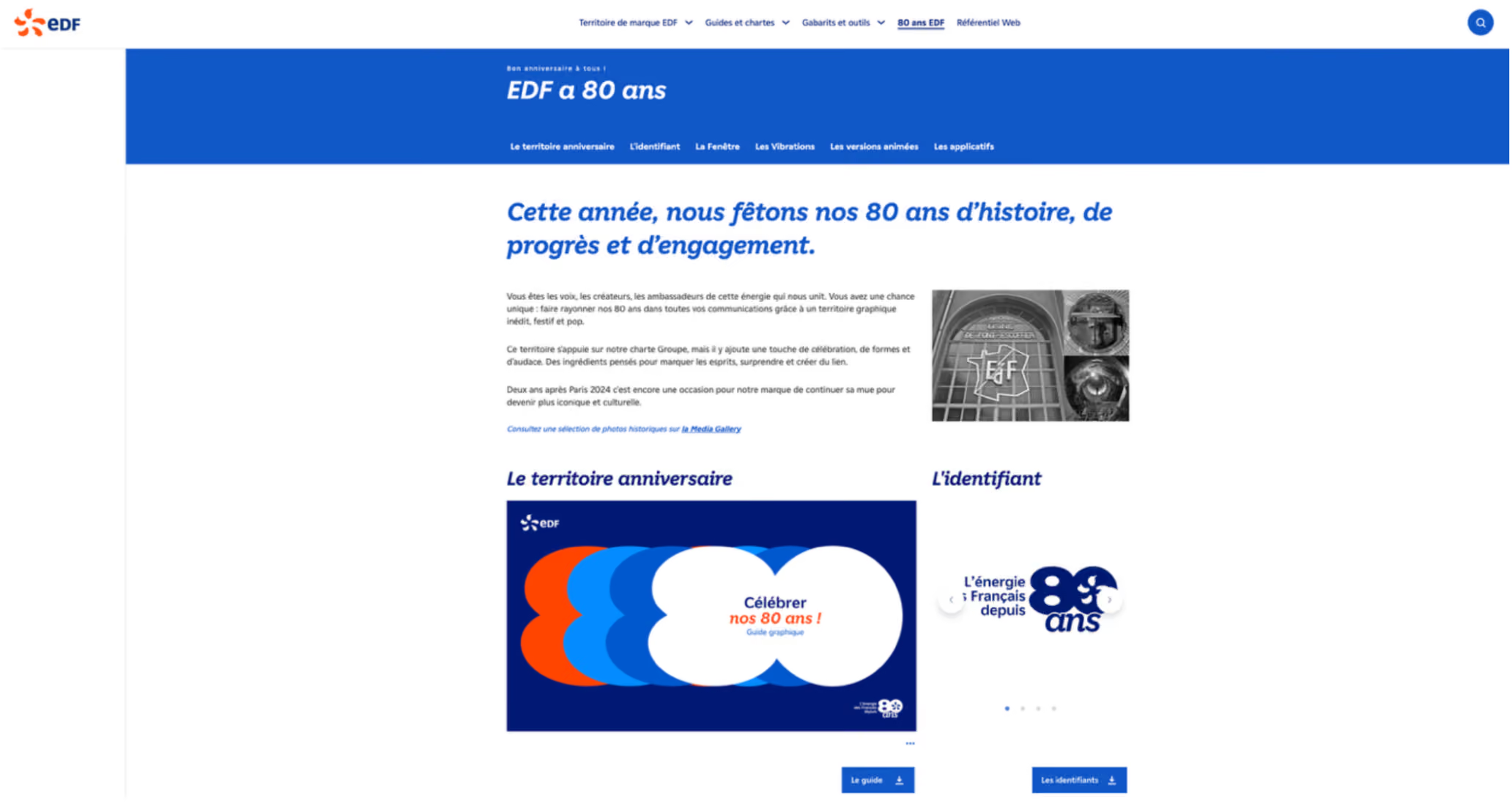
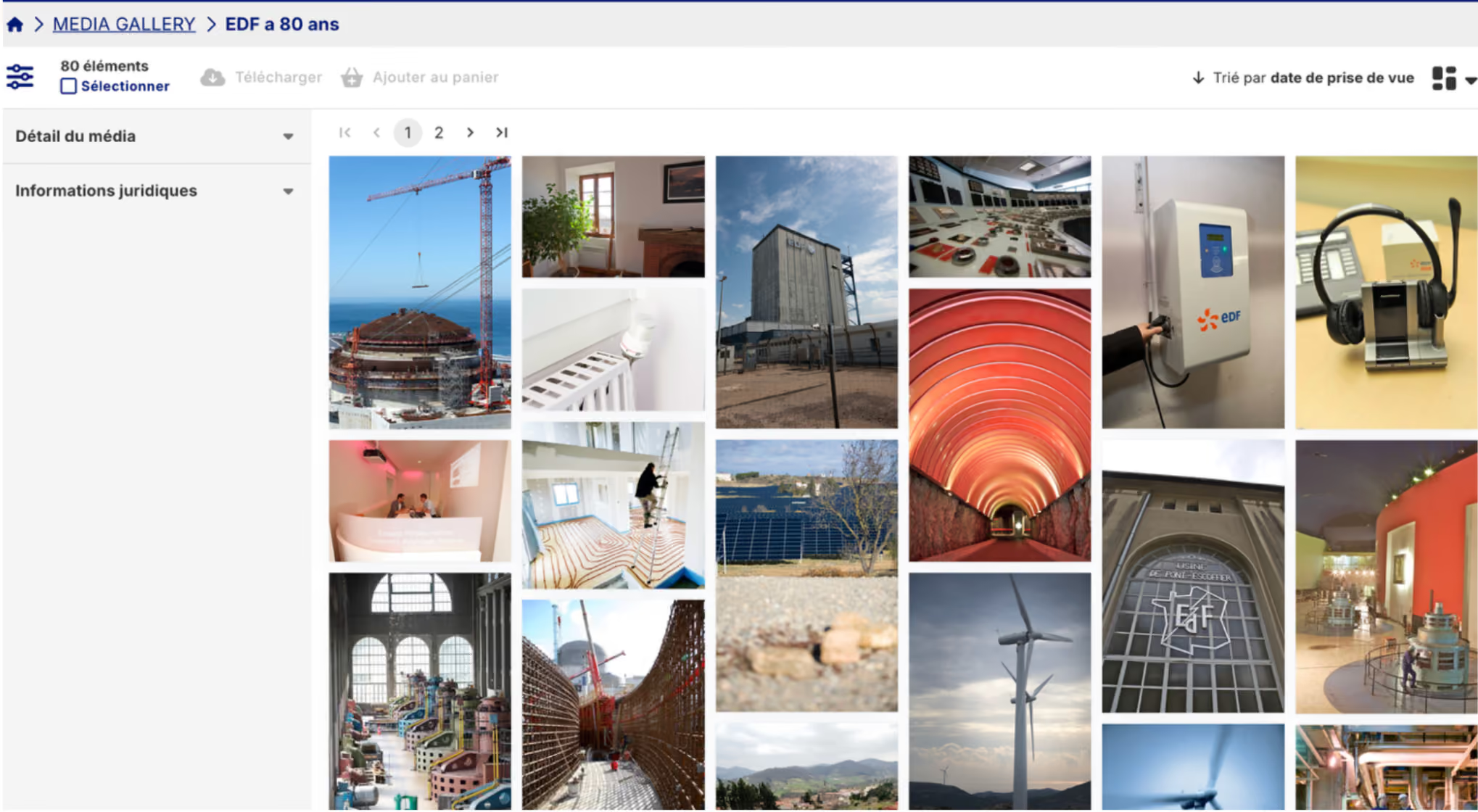
In 2026, to mark EDF’s 80th anniversary, this strength was demonstrated in practice: the anniversary campaign was rolled out simultaneously on both platforms.
Dedicated page on the Brand Center
A selection of historical photos featured in the Media Gallery
A first of its kind that illustrates how the two spaces complement each other.
A modernized contribution space
The contribution interface has been redesigned. It is now more modern, clearer, and more similar to other Keepeek modules. It includes all the basics: search, select, add to collections, and share. Its user-friendly design means that training is minimal. Action can be taken more quickly. Rights are finely defined. External partners can be invited securely. The platform remains the point of exchange, not the email inbox.
For Valérie, this modernization is essential to encourage contribution and limit scattered practices: " We rely heavily on sharing links. It simplifies our work and reduces our carbon footprint."
Thanks to this modernized interface, teams can contribute more easily, collaborate remotely, and submit their content without having to use external tools or perform cumbersome transfers. This development supports a simple ambition: how can you manage your media effectively when you contribute on an ad hoc basis? By reducing the number of steps, speaking the language of the teams, and providing clear workflows for validation and indexing.
The metaphor is telling: the group's Media Gallery is a large building. Inside are "apartments" for the entities. Each entity retains its autonomy. It indexes, classifies, and publishes. But everything belongs to the same building. Media circulates more easily between the national and local levels. We avoid redoing shots that have already been taken. Existing content is promoted. Valérie perfectly sums up the governance vision: " We no longer want people to keep their media safely at home. We want everything to be shared." This philosophy structures the way the DAM operates. It avoids duplication of production and encourages sharing between entities.
Governance is based on common rules. Editorial committees drive the life of the collection. Cleaning routines remove obsolete content. Rights are managed with precision. Access profiles are clear. Usage is measured. This mechanism makes the centralization of brand content tangible on a daily basis. It's not a slogan, it's an organizational model.
Documentary expertise: the foundation of quality
The Keepeek documentation team plays a key role. It manages the incoming media flow, selects and indexes it. It also adds legal information, attaches image rights authorizations, and ensures compliance. Every piece of media posted online is clean, understandable, and reusable. Searching becomes efficient. Teams find what they need quickly. They reuse better and avoid risks.
Valérie describes the collaboration with the Keepeek documentation team as very close: " Clarisse can finish my sentences," she jokes. She adds: " We communicate almost daily."
Finally, Valéreie highlights the importance of volume: “We have a database of approximately 135,000 media assets, with 25,000 actively published at any given time.” The breakdown of this database reflects the dominant uses: 75% photos and feature stories, 23% brand identity and style guide elements, and 2% videos and audio files. This workload requires consistent content management, several days a month. This regularity prevents the content from becoming outdated. The collection remains dynamic. The editorial pages of the Brand Center are kept up to date. The themes in the Media Gallery remain relevant.
Multistatus, a gain in control
Multistatus changes the lives of teams. A media file may be aesthetically flawless but legally KO. The status indicates this. We know what we can and cannot use. Ambiguity disappears. The publication process becomes more secure. Teams gain autonomy. They reduce back-and-forth communication with the legal department. They manage their media files efficiently.
When it comes to quality, Valérie is explicit: " I am extremely insistent, but that's where successful research lies." When she talks about legal compliance, she says, " A media outlet may be aesthetically OK. However, legally speaking, if it lacks the necessary authorizations, it's KO." Multistatut thus provides essential transparency for teams.
This technical choice meets a business need. EDF produces and receives a wide range of content: reports, profiles, site views, educational videos, podcasts, etc. Image rights situations vary. Multi-status provides a simple solution to a complex issue.
The role of the DAM Manager
Governance relies on one key role: the DAM Manager. At EDF, this role is filled by Valérie Bruandet. She coordinates the ecosystem, leads committees, monitors KPIs, prioritizes requests, and arbitrates changes. The DAM Manager embodies the vision of effective media management within a large group. She organizes alignment between entities and the national level. She links document governance, interface design, and technical management: " " says Valérie, " is an almost essential factor for success."
Regarding her own role, she explains: " Overall, the Media Center takes up between 50% and 90% of my time, depending on the phase , " up to 90% during build, and around 50%/60% during run. This explicit framing shows that DAM is not "just a tool." It is a system that needs to be managed. Centralizing brand content has an organizational cost. But the return on investment can be seen in consistency, time saved, and risk reduction.
Metadata quality: what makes all the difference
Any DAM project will fail if the data is poor. EDF and Keepeek therefore prioritized document quality. Workshops defined the taxonomy, and record sheets were differentiated according to media type. There is no single record for everything. A video does not have the same fields as a logo. A portrait does not have the same issues as an industrial landscape. This granularity avoids unnecessary fields and focuses efforts on the essentials.
The reception of metadata from photographers has also been improved. We collect what exists. We fill in what is missing. We ensure that legal information is present. We attach image rights authorizations. The result can be seen in the search results. Teams find what they need, reuse it without fear, share it, and move forward efficiently.
However, Valérie emphasizes that metadata quality does not depend solely on the interface: it relies on close collaboration between EDF teams and the Keepeek documentation team. The latter handles incoming data, legal enrichment, and file structuring. Valérie summarizes the workload required to maintain this level of quality: " To give you an idea of the scale, it represents between 6 and 10 days of document management services per month."
This ongoing rigor ensures that users find what they are looking for, reuse media with confidence, and avoid the legal risks associated with improper use.
The value of a DAM is not limited to files. It also plays a role in content animation. EDF participates in editorial committees. The Brand Center pages highlight key resources. Hot topics are visible. Teams know where to go. Campaigns find their content faster. Centralizing brand content becomes a no-brainer. We gain visual consistency and speed of execution.
The Media Gallery, meanwhile, feeds off the field. Reports flood in. Formats are optimized for use. External profiles are carefully managed. Exchanges are secure. Feedback from the business enriches the settings. The tool follows the life of the content, not the other way around.
Result: Value Created in Numbers
This section presents the concrete results measured at the time of the presentation on June 16, 2026.
A 47% increase in downloads between Q1 2025 and Q1 2026
10,000 active visitors to the Media Center
6 to 10 days of reference services per month to maintain the quality of the collection
The next steps for the project
EDF and Keepeek/Papirfly have entered into a 6-year partnership. The upcoming topics reflect the project’s ambition:
Integration of new subsidiaries into the group's systems
Integration of artificial intelligence: automatic video captioning, media indexing via AI, and natural language search, to start with
Add brand consistency and compliance modules with compliant video templating and automated verification of visuals
Integration with the EDF ecosystem: ensuring connectivity with the group's web interfaces
Use cases, inspiration, and methodology
The EDF case is part of a broader trend: leveraging a diverse media portfolio while accelerating production. To see how another organization is addressing this challenge, check out the Colas example and its approach.
And to frame a project from the outset, this guide helps you choose a suitable DAM solution and establish the right method.
These resources expand on the logic presented here. They shed light on the central question: how can you effectively manage your media when you have multiple teams, varied uses, and ambitious goals?
The redesign of the EDF Media Center shows what can be achieved when brand content is centralized effectively:
single access;
user-oriented interfaces;
an editorialized Brand Center;
a personalized Media Gallery;
a modernized contribution space;
clear governance;
actionable KPIs;
documentary quality that stands the test of time.
The suite forms a collaborative media software solution that supports production, secures distribution, and accelerates brand deployment across the group.
This project highlights an obvious fact: technology alone is not enough. Clear roles, solid routines, constant monitoring of usage, and a willingness to make quick corrections are also necessary. This is how, step by step, we build a platform where everyone benefits and where the brand gains consistency, speed, and impact.
Watch the replay of the conference "EDF unifies and accelerates its communications thanks to the Keepeek Media Center"
The 10 Best Brand Management Software Platforms in 2026
Brand management software centralizes media, brand governance, and template-based content creation in a secure environment. Discover 10 platforms to watch in 2026.


.avif)