Brand consistency is now a key challenge for all companies that use multiple distribution channels. Consumers expect a seamless and consistent experience, whether they’re viewing a product page on an e-commerce site, a marketplace, or a search engine. The recording of the webinar “PIM + DAM:AI for Brand Consistency” explores how combining product media management—using Akeneo PIM, Keepeek DAM, and artificial intelligence—improves digital brand management while reducing errors and accelerating time to market.
Current challenges in product media management
The proliferation of sales channels leads to a dilution ofbrand image. Visuals are often rejected by marketplaces for failing to comply with the required formats. Product media management then becomes complex and time-consuming.
Several observations characterize the sector:
- inconsistent or non-compliant visuals;
- incomplete or inaccurate product information leading to costly returns;
- a loss of SEO traffic to the benefit ofAI and marketplaces;
- an increased workload for marketing and retail teams, who must produce content faster and for more channels;
- difficulty managing local and international nuances.
The result: 71% of consumers expect a consistent omnichannel experience, but only 41% of brands deliver it. The challenge is clear: adopt the best PIM and DAM software for product content and strengthen digital brand management with the right tools.
The role of PIM and DAM in brand consistency
Two solutions are essential to address these challenges:
- PIM (Product Information Management) centralizes and enriches product data.
- DAM (Digital Asset Management) manages media assets by ensuring the reliability of visuals and guaranteeing their compliance.
These tools become even more powerful when they are interconnected. That's why Keepeek and Akeneo have developed a connector that enables synchronization of multi-channel media assets. This seamless integration eliminates manual data entry, reduces errors, and speeds up time-to-market.
To learn more about the complementary nature of PIM and DAM, check out our article: PIM + DAM, the winning combination to boost your productivity and sales.
A four-step workflow to ensure compliance
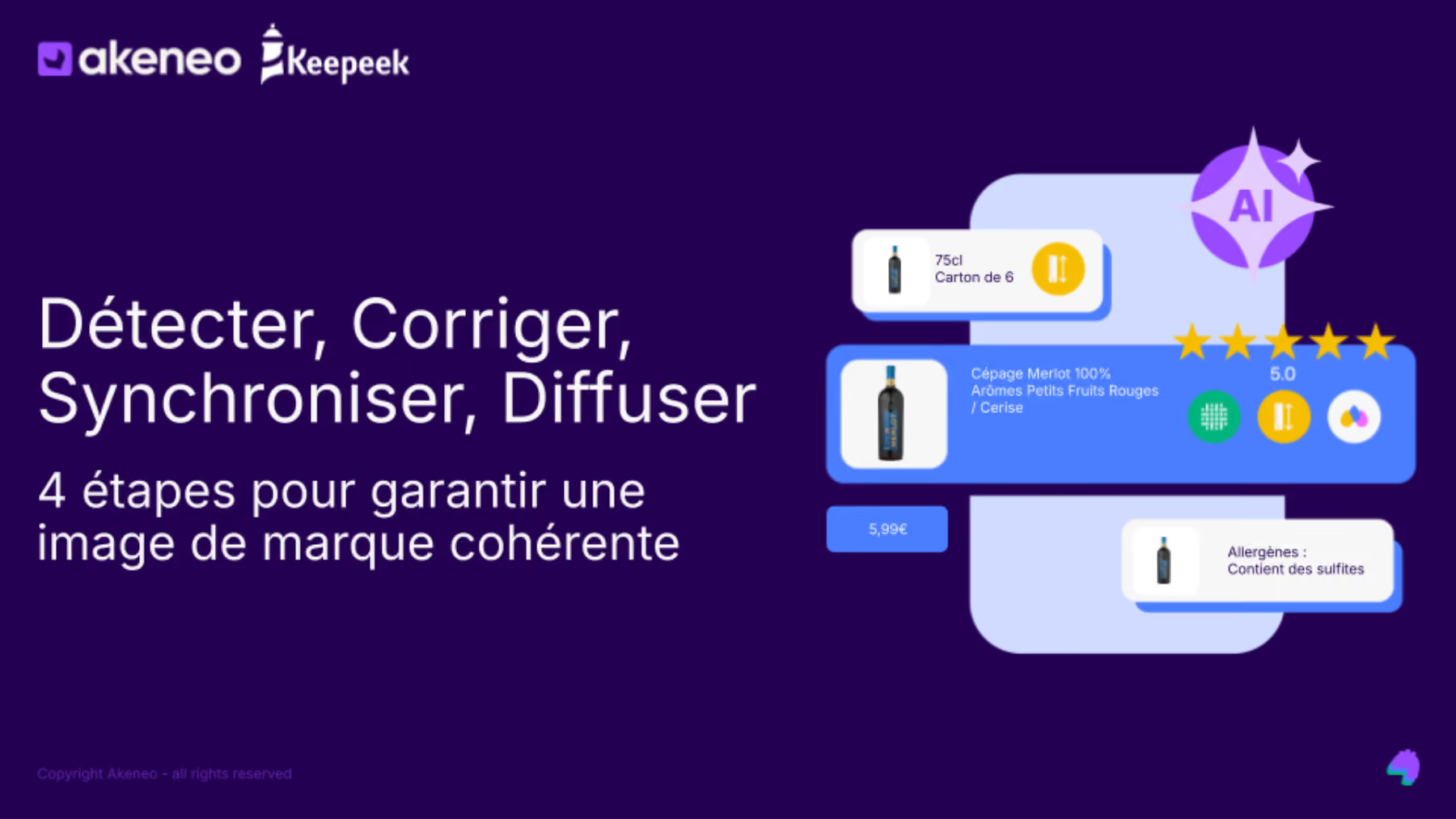
Our webinar presents a simple and effective workflow based on four key steps: detect, correct, synchronize, and distribute.
Detect anomalies
AI s allow for the automation of quality control:
- detection of blurred or pixelated images;
- product alignment verification;
- checking the presence of the logo and compliance with graphic guidelines;
- standardization according to GS1 standards.
This automation significantly reduces the time spent on manual checks and ensures brand compliance with the DAM.
Automatically correct
Once anomalies are detected, theAI suggests automatic corrections: cropping, sharpening, upscaling, or clipping. These adjustments ensure that the final media files are consistent and ready for distribution.
Synchronize data and media
PIM/DAM integration streamlines content indexing and synchronization. Product information and visuals are linked without risk of loss or misalignment. Teams can thus maintain a reliable and consistent catalog across all channels.
Broadcast on all channels
The PIM automatically prepares media for each platform: cropped images for Amazon, vertical formats for Instagram, enriched data sheets for e-commerce, and adapted materials for the press. Distribution is done with a single click, ensuring thatbrand identity remains consistent.
AI 's Strategic Contribution to Digital Brand Management
Artificial intelligence is not limited to automating repetitive tasks. It brings real added value to content management for retailers and manufacturers:
- Enrichment of product sheets: automatic suggestions for missing information (characteristics, agreements, recommendations).
- Data extraction from visuals: legal notices, allergens, names—everything is recognized and integrated automatically.
- Multilingual translation and contextualization: descriptions are adapted to specific markets (technical precision in Germany, elegance of ritual in Japan, user-friendliness in the United States).
Finally, theAI helps brands prepare for Generative Engine Optimization (GEO). When dealing with search engines AI, companies must provide enriched and contextualized product data to prevent the generated responses from distorting their image.
Tangible benefits for brands
The combination of Akeneo's PIM, Keepeek's DAM, and theAI delivers several measurable benefits:
- reduction in the number of product returns thanks to reliable information;
- Accelerate time-to-market with faster workflows and fewer errors.
- strengthening brand consistency across all channels;
- better compliance of visuals with the expectations of marketplaces and distributors;
- Optimizing discoverability on AI search engines and marketplaces.
These benefits make Akeneo and Keepeek the best PIM and DAM software for content produced in a multichannel environment.
To learn more about how this duo can help your online business, check out the article: PIM + DAM, the winning combination for optimizing your e-commerce content management.
Watch the webinar replay:
The recording of the webinar “PIM + DAM: The ‘AI ’ for Brand Consistency” demonstrates that the combination of product media management, Akeneo PIM, and Keepeek DAM—enhanced by the “AI ”—provides a practical solution to today’s challenges in maintaining multichannel brand consistency.
Companies can thus:
- strengthen the digital management of their brand;
- ensure the compliance of visuals and associated information;
- accelerate their time-to-market;
- and remain competitive in the age of search engines AI.
Brand consistency is no longer built solely on high-quality visuals: it relies on reliable, automated workflows tailored to each channel.



.avif)